

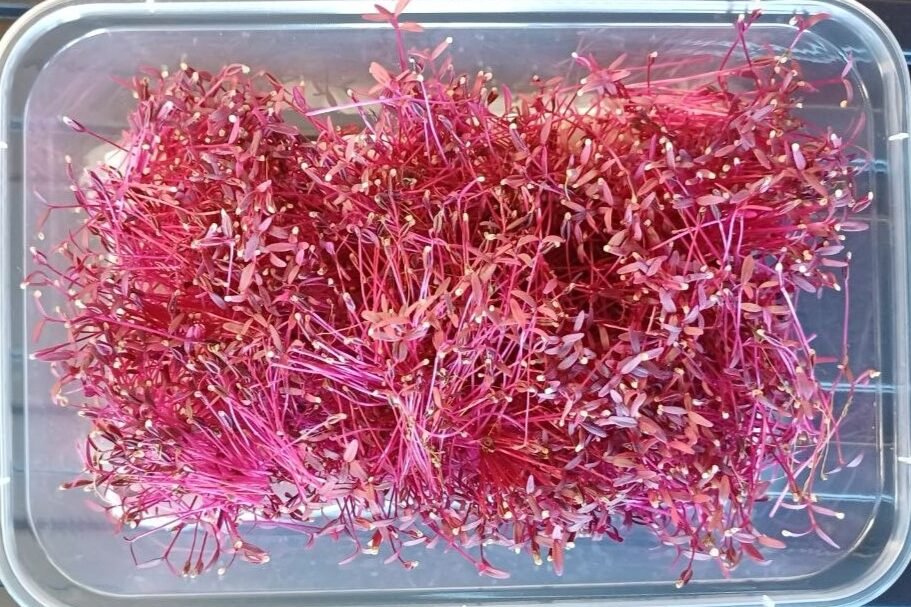
Some ingredients earn their place on the plate because of flavour. Red amaranth microgreens earn theirs mostly because of colour. Their thin stems and small leaves range from deep magenta to bright pink, and a few of them can change the look of an entire dish. At SEROVA, red amaranth is one of the varieties in our planned production.
What makes red amaranth stand out
The colour comes from natural pigments in the plant, and it tends to look strongest when the microgreens are grown under good light and harvested at the right moment. The stems are slender and slightly translucent, so even a small pinch looks delicate rather than heavy. This is why red amaranth works best as an accent, not as a base.
The flavour is mild and earthy, with a soft, tender texture. It does not compete with other ingredients, which makes it easy to pair with both rich and light dishes.
Colour is often the first thing a guest notices on a plate.
How to use it in the kitchen
Because the leaves are fine and delicate, red amaranth is best added at the end, just before serving. Heat and heavy sauces make the stems collapse quickly. A few simple ideas:
- Over a chilled soup or a creamy purée
- On avocado toast or open sandwiches
- As a finishing touch on grain bowls and salads
- Beside soft cheeses on a serving board
Handling and storage
Keep the package closed and refrigerated at 4°C or below, and use the microgreens soon after opening. Avoid excess moisture, which can make the thin stems limp. For the best result, place them on the dish at the last moment so the colour stays vivid.
Interested in red amaranth for your menu? Contact us to ask about planned production, availability and lead time.